With the rapid development of communications and electronics industries, the production of rubber keys has also developed into a mature technology. These key products are made of silicone rubber through high temperature molding to form the required key surface, and then formed by spraying, screen printing, punching and peeling and other processes. Here I make a preliminary discussion on this screen printing process.
1. Features of silicone rubber keys
The hardness of the silicone rubber used as the key material is generally around 45°, and the single key surface printed has convex, concave, and flat surfaces, all of which are solid line printing. In addition to accurate position and clear pictures and texts, printing requires that the ink is suitable for printing silicone rubber, the ink layer reaches a certain thickness, has strong adhesion and wear resistance, and does not change color after high temperature baking. Therefore, it puts forward special technical requirements for the screen printing process.
2. Screen printing process
There are many methods of screen printing plate making, mainly using the photosensitive plate making method, that is, directly coating the photosensitive adhesive on the net, and drying it to form a photosensitive film of a certain thickness to become the graphic carrier. The process flow is:
Screen selection→frame selection→stretching screen→cleaning screen→drying→coating photosensitive adhesive→exposure→developing→printing
The specific process is as follows:
1. Screen frame: Aluminum alloy is generally used, which is easy to operate, has high strength and is not easy to deform. Before stretching the mesh, wipe the frame with cyclohexanone to remove residual grease and dirt, then wipe with industrial alcohol, rinse with water, and dry the frame. In the screen printing operation, multiple dryings are required, so the drying conditions and cleaning should be strictly controlled.
2. First, use wire mesh for stretching the mesh, and use nylon mesh for rubber screen printing. The ink has a good rate of passing through the mesh and the tension is constant. Use a mesh that can cover the edge of the mesh frame and have an extra 6-10cm outside the mesh frame. Use pneumatic stretching. Stretch the mesh with a mesh machine, and perform the six-point test with a tensiometer. After reaching the required tension, apply all-purpose glue to make the mesh stick firmly to the mesh frame, and use hot air to speed up the drying. Mesh machine, stick the excess wire mesh to the outside of the mesh frame, in order to maintain the adhesion fastness of the wire mesh. Cut off the excess wire mesh, wash the mesh surface with cyclohexanone and denatured alcohol, and then dry it. If the tension of the stretching screen is unstable, it may cause the font to be out of place and blurred, and the substrate with the chord surface will cause the difference in the thickness of the ink layer. The flat orthographic printing needs a screen with high tension, and the printing surface with a curved surface needs a screen with a small tension. The screen tension range of the process application is 3N/Cm ~ 7N/Cm. Generally, the screen with high tension has a short service life. It should be selected according to the needs in the process: 100-mesh straight yarn screen for printing conductive ink, and 200-300-mesh diagonal screen for printing orthographic characters and color blocks to ensure the thickness of the ink layer and the graphics and text. completeness.
3. Coating photosensitive adhesive: It is usually applied by hand, leaning the blank screen against the wall, coating 2 to 3 times with a stainless steel coating tank, at an angle of about 50°, observe the background color of the adhesive layer, and measure with a film thickness gauge thickness. The thickness of the emulsion on the black orthographic and background scraping is 20-25μm, and the thickness of the hollow printing screen with radian is 28±3μm. The thickness of the emulsion in different processes is different, and the thickness of the emulsion must be uniform. Put it in the oven and control the drying temperature at about 40 ° to avoid the effect of high temperature on the performance of the light, and pay attention to the safety of the light during the drying process. Yellow light should be used for lighting, and white light should not be injected into the room. .
4. Exposure: Exposure is to make the photosensitive film in the non-graphic part exposed to light to undergo a chemical reaction, and the molecular structure between the films is cross-linked and hardened. From soluble to insoluble, after development, a light-blocking layer (hardened part) and an image part with a transparent mesh (no light photosensitive glue is soluble in water) are formed, so that the ink surface passes through the mesh to form a printing pattern. Use a vacuum printing machine for exposure, stick the film on the screen with transparent tape, the film is facing up, stick the template to the film, cover the screen frame with black cloth, put down the leather cover, and start the air extraction device (air pressure is about 110- 120PA), wait for the air pressure to stabilize, activate the exposure device after the leather cover is attached to the glass, and set the exposure time according to the properties of the photosensitive adhesive, the thickness of the film layer, and the thickness of the graphic. Usually controlled between 20S-60S.
5. Development: Soak the exposed screen in water, and then place it under a certain pressure of water to rinse both sides of the film until the film in the image part is rinsed clean and the mesh forming the image is completely transparent. After the graphic part and the non-graphic part are displayed, the surface should be smooth when you touch it with your hand, there is no trace of being dissolved, filter out the water droplets and send it to the drying box for drying. The drying screen generally needs to be exposed twice to enhance the service life of the screen.
6. Deploying ink: The silicone rubber printing ink must be suitable for the physical and chemical properties of silicone rubber, and can be firmly attached to the printing surface. Like other inks, it is mixed with pigments, binders, and solvents in a certain proportion. After the three-liquid wheel Grinded. Usually kerosene is used as a diluent, and a vulcanizing agent (a small amount) is added to the single-liquid ink to enhance the adhesion and wear resistance of the imprint, and the two-liquid ink is directly printed. The storage temperature of the ink is controlled at 0> ~ 10 ℃, and it is dried at high temperature after printing.
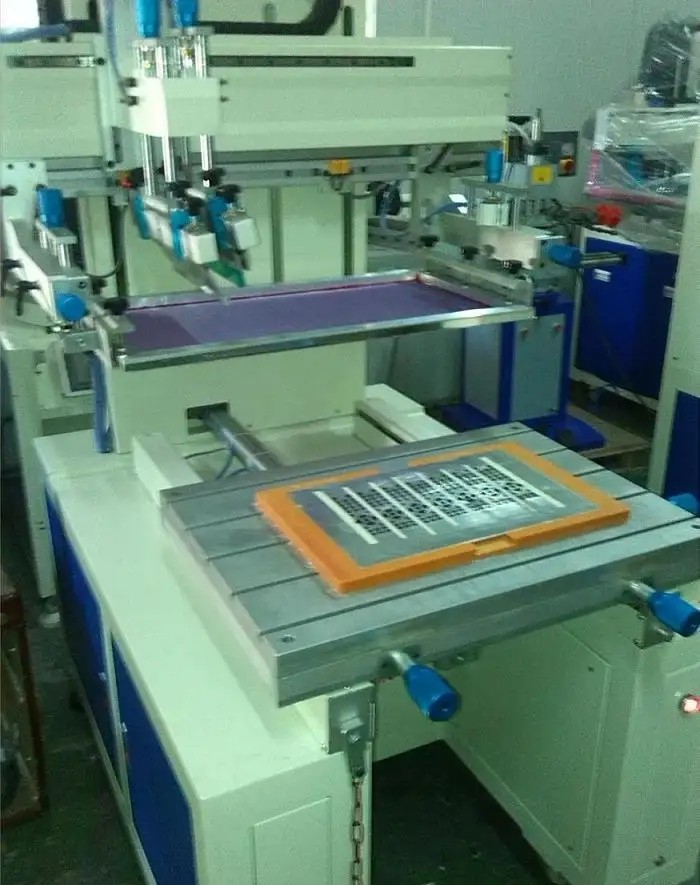
7. Printing: Prepare the jig, screen, and ink before printing, clean the printing surface without oil stains, and if the surface is too smooth, it must be treated with flame and corona to ensure good ink adhesion. On the machine, the keys to be printed are fixed in the fixture, the hardness of the scraper should be equal to the hardness of the rubber (about 55°), the gauge line is positioned, and the gauge line printed on the screen is aligned with the gauge line on the cover plate. , to overprint the sample with the exact location. Adjust the distance between the screen and the printing surface, so that the squeegee screen can contact the substrate well, and the coverage of the squeegee stroke must be 2 to 5 larger than the pattern surface. The squeegee angle is controlled at about 75°, and the first piece must be inspected during printing, compared with samples, and sampled on time to achieve comprehensive control of product quality.
3. Discussion on process technology
The copy position of the screen printing film must correspond to the fixture. When printing the screen, the film is in close contact with the screen to prevent the position from moving. During the design process, the thin lines should not be too close, otherwise it will easily cause adhesion. If the printing of the base color is required, the base color is generally 0.1~0.2m smaller than the surface color, so as to ensure that the printing surface is completely covered and the product quality is ensured. In the above copying screen printing process, due to the softness of the substrate and the small tension of the screen, it is easy to appear blurred fonts, inaccurate positions, and uneven thickness of the ink layer. In the process of dealing with these problems, It must be carefully analyzed. Use a screen with lower tension for the curved printing surface, and the squeegee should not be too hard. The fluidity of the ink is better (but the font should be controlled to become thicker), and the squeegee speed should be controlled at 12 ~ 24Cm/ S. During the baking process of the printed product, the oven temperature and baking time must be controlled to improve the adhesion of the product.
Silicone rubber is a special kind of screen printing. In addition to soft substrates that need to be equipped with soft scrapers and special inks, in actual operation, it is necessary to master various processes to print ideal products.