Membrane Switches: An Overview
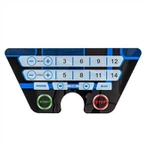
Membrane switches are a kind of human machine interface technology that consists of multiple layers of materials, including a printed circuit board, a spacer, and a graphic overlay that is typically made of polyester or polycarbonate.
The printed circuit board layer of a membrane switch typically contains rows and columns of conductive material such as copper or silver. Meanwhile, the spacer layer between the circuit board and the graphic overlay contains tiny spaces punctured by holes or channels that help to create a pressure-sensitive activation switch.
The graphic overlay of a membrane switch contains the printed designs, icons, or text that allow a user to interact with a device or system. It is also the layer that is visible to the user and is responsible for communicating information to them, such as button labels, indicator lights or touch areas.
Applications of Membrane Switches
The following are common applications of membrane switches:
1. Medical Devices
Membrane switches are commonly used in medical devices due to their ability to operate reliably in sterile environments. They are typically used in diagnostic equipment, patient monitoring systems, and laboratory instrumentation. They can also be used in medical devices that require a degree of spill resistance to protect against fluids.
2. Industrial Controls
Industrial machines and equipment often use membrane switches to control complex processes. It is because membrane switches are durable, easy to clean, and can operate in harsh environments that are subject to heat, extreme temperature changes, water, and chemicals.
3. Consumer Electronics
Membrane switches are popular in consumer electronic devices, including mobile phones, tablets, gaming consoles, and remote controls. They are affordable to manufacture, can be customized for branding and color preferences, and have excellent tactile feedback systems.
4. Automotive and Aerospace Instrumentation
Membrane switches are particularly useful in automotive and aerospace instrumentation because they are lightweight, flat, and can operate in specific temperature and pressure ranges. These qualities make membrane switches ideal for use in automobile dashboards, aircraft instrument panels, and control systems.
5. Retail Applications
Membrane switches are also used in retail environments, particularly in point-of-sale (POS) systems. They serve as magnetic card readers, touch imaging displays, or numeric keypads. They are also common in ATMs, gas pumps, and other self-service kiosks found in shopping malls and grocery stores.
Advantages of Membrane Switch Technology
There are several advantages to using membrane switches, including:
1. Cost-Effective
Membrane switches are more cost-effective than traditional mechanical switches, particularly in high-volume production. They are easier to manufacture, have fewer moving parts, and require less assembly time.
2. Customization
Membrane switches can be customized to meet various functional, graphical, and branding needs. They can be tailored to specific form factors, including colors, shapes, sizes, and textures.
3. Durability
Membrane switches are durable and reliable, with a lifespan that can last anywhere between 100,000 and 10 million actuations. Their robustness makes them ideal for use in harsh environments, such as industrial machinery, automotive, and aerospace instrumentation.
4. Flexibility
Membrane switch technology is flexible and adaptable. They can be easily integrated with other components to create a complete user interface system. The multiple layers allow the switch to be made in any shape or size, making it ideal for custom applications.
5. Ease of Maintenance
Membrane switches are relatively easy to clean and maintain. Their smooth non-porous surfaces and sealed edges prevent dirt, dust, or liquids from entering the switch mechanism, reducing the risk of failure.
Disadvantages of Membrane Switch Technology
While membrane switches have several advantages, there are also some limitations to their use, including:
1. Flat Buttons
Membrane switches typically use flat buttons, which do not provide the same degree of tactile feedback as mechanical switches. Although they can be designed to have dome-shaped buttons that give a similar feedback, it still lacks the feedback of mechanical switches.
2. Limited Travel Distance
The travel distance of a membrane switch is limited, which can affect its tactility, and may not be as optimal to use as other switches.
3. Complexity
Despite their flexibility, the design and manufacture of membrane switches can be complex, particularly for applications that require specific features, graphics or tolerances. This can result in complex design and manufacturing processes that take longer to complete and can result in increased costs.
In conclusion, a membrane switch is a versatile human-machine interface technology that offers several advantages, including low cost, customization, durability, flexibility, and ease of maintenance. It is used across various industries, including medical devices, industrial machinery, automotive, aerospace instrumentation, consumer electronics, and retail environments. Despite some of its limitations, membrane switch technology offers significant advantages that make it an attractive and viable option for many applications.